
Mould & indoor air quality
When Is Air Sampling Useful?
A practical guide to understanding when air sampling or monitoring adds useful information—and when a property inspection should come first.
Air sampling can be helpful, but it is not a universal first step for every damp, mould or indoor air quality concern. Its value comes from answering a clear question about a property. The most useful starting point is usually to understand the building, the affected rooms and the likely source of moisture or poor ventilation.
The short answer
Air sampling is useful when it will change the next property decision. It should complement a considered inspection, not replace one.
Start with the question, not the test
A single air sample is a snapshot. It may be useful when it helps clarify a specific uncertainty, such as whether a concern is localised or whether further investigation is justified. It is less useful when there is already a visible issue and a clear property condition that needs attention, such as a leak, persistent condensation or inadequate ventilation.
This is why a professional assessment should start with the property story: where the concern appears, when it gets worse, what happened before it started, and whether humidity, water ingress or occupancy patterns are relevant. The World Health Organization identifies persistent dampness and microbial growth in interior surfaces and building structures as the central conditions to prevent or minimise. [2]
Situations where sampling or monitoring can add value
The right method depends on the question. In some homes, simple monitoring of temperature, humidity and ventilation indicators over time is more useful than a one-off sample. The Centre for Sustainable Energy notes that monitoring can help identify issues with damp and mould and inform decisions about ventilation, heating, insulation and draught-proofing. [1]
A pattern needs to be understood
For example, the problem appears in a bedroom on waking, in a bathroom after use, or in a room that stays colder than the rest of the property.
The visible evidence is incomplete
An assessment may identify an uncertainty that needs more information before the next property decision can be made.
A rental or commercial decision needs evidence
A clear assessment record can help owners, occupants and property managers agree a proportionate practical response.
A remediation plan needs a baseline
Where an agreed assessment shows that additional information is useful, targeted monitoring can support a clearer follow-on plan.
When an inspection should come first
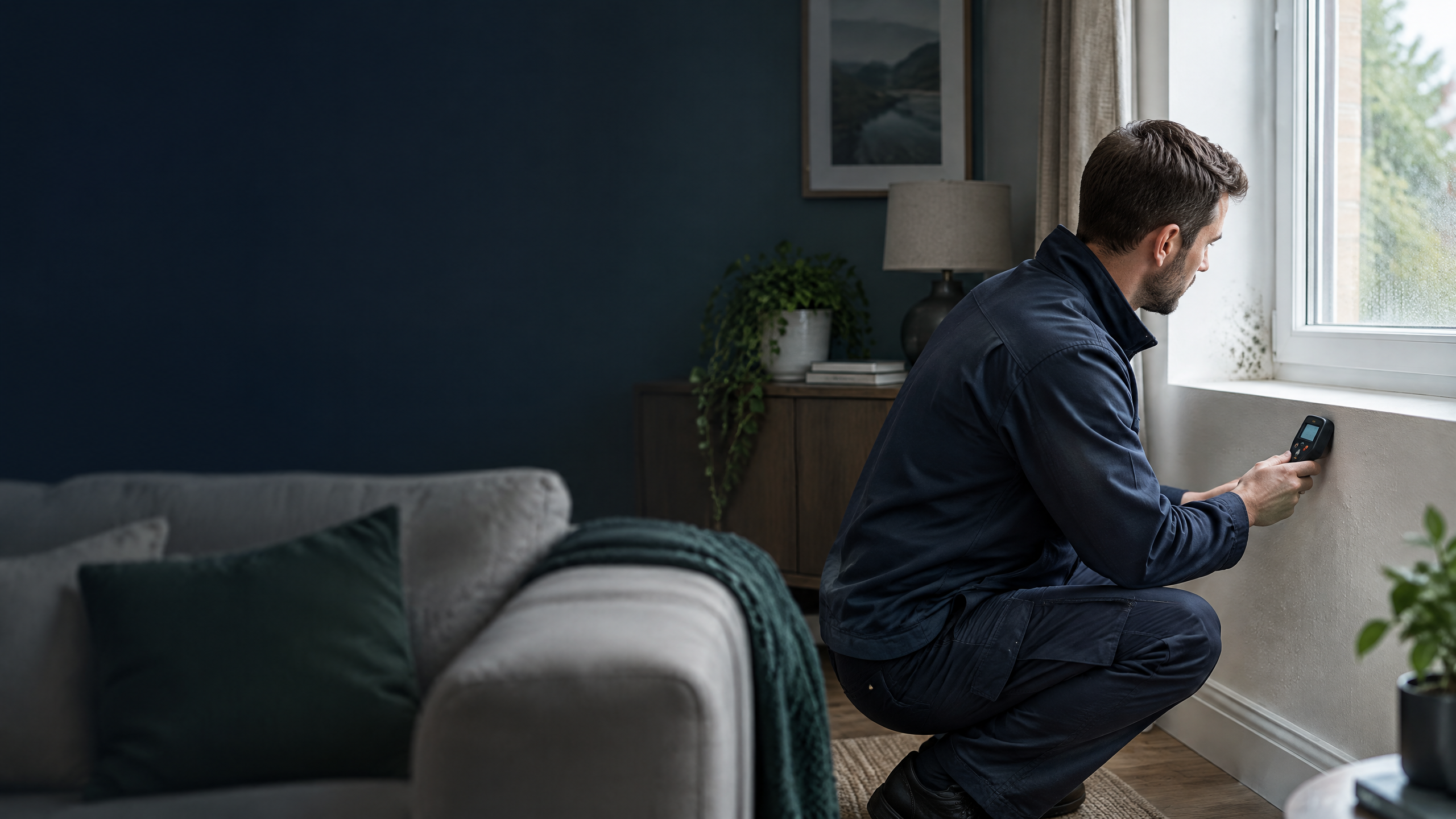
Where mould is visible or an obvious moisture source is present, the first priority is often to identify and address the property condition. Air sampling cannot repair a leak, improve airflow, dry a wall or resolve condensation. An inspection makes sure that any testing or monitoring is tied to a practical next step rather than creating numbers without context.
This approach is particularly important for rented homes. England’s consolidated government guidance on damp and mould is intended to help housing providers reduce the risk in their homes and may also be relevant to owner-occupiers and tenants. [3] A property-focused record of observations, history and actions is often the foundation for a useful response.
Air sampling and monitoring are not the same thing
Air sampling is a targeted collection of information at a particular point in time and place. Indoor environment monitoring tracks measures such as temperature, relative humidity or ventilation indicators over time. The latter can reveal patterns that a single visit may miss, particularly when the concern changes with cooking, bathing, sleeping, drying clothes or outdoor weather.
Monitoring needs a sensible plan. The Centre for Sustainable Energy recommends taking readings in different rooms and at relevant times, including after bathing, during and after cooking, and in bedrooms on waking. [1] The goal is to understand how the property behaves, not to chase one isolated reading.
How to make a sampling decision more useful
Before you agree to any sampling, ask for a straightforward explanation of the decision it is intended to inform. A good scope should answer the following questions.
What this means for mould concerns
Mould is a property issue that should be taken seriously, but it does not call for the same response in every situation. Sometimes the best next step is better monitoring of humidity and ventilation. Sometimes it is a focused property inspection. Sometimes careful remediation and attention to the contributing conditions are needed. The appropriate route depends on what has been observed and what remains uncertain.
RevivePro’s role is to help customers understand the property context and agree a proportionate next step. We do not provide medical advice or diagnose health conditions. If you have health concerns, seek advice from an appropriate healthcare professional.
Need clarity about a property concern?
Start with a mould inspection and air-quality assessment.
Tell us what you have noticed and we will help establish the most suitable property-focused next step.
Explore the assessment serviceNottinghamshire property guidance
Local questions deserve a property-specific answer.
RevivePro discusses mould inspections and indoor air-quality assessment for properties across Nottingham and nearby Nottinghamshire communities, including:
- Nottingham
- West Bridgford
- Beeston
- Arnold
- Carlton
- Gedling
- Ruddington
- Hucknall
- Stapleford
- Long Eaton
- Ilkeston
- Eastwood
- Bingham
Frequently asked questions